Precision Peptides for
Biological Research
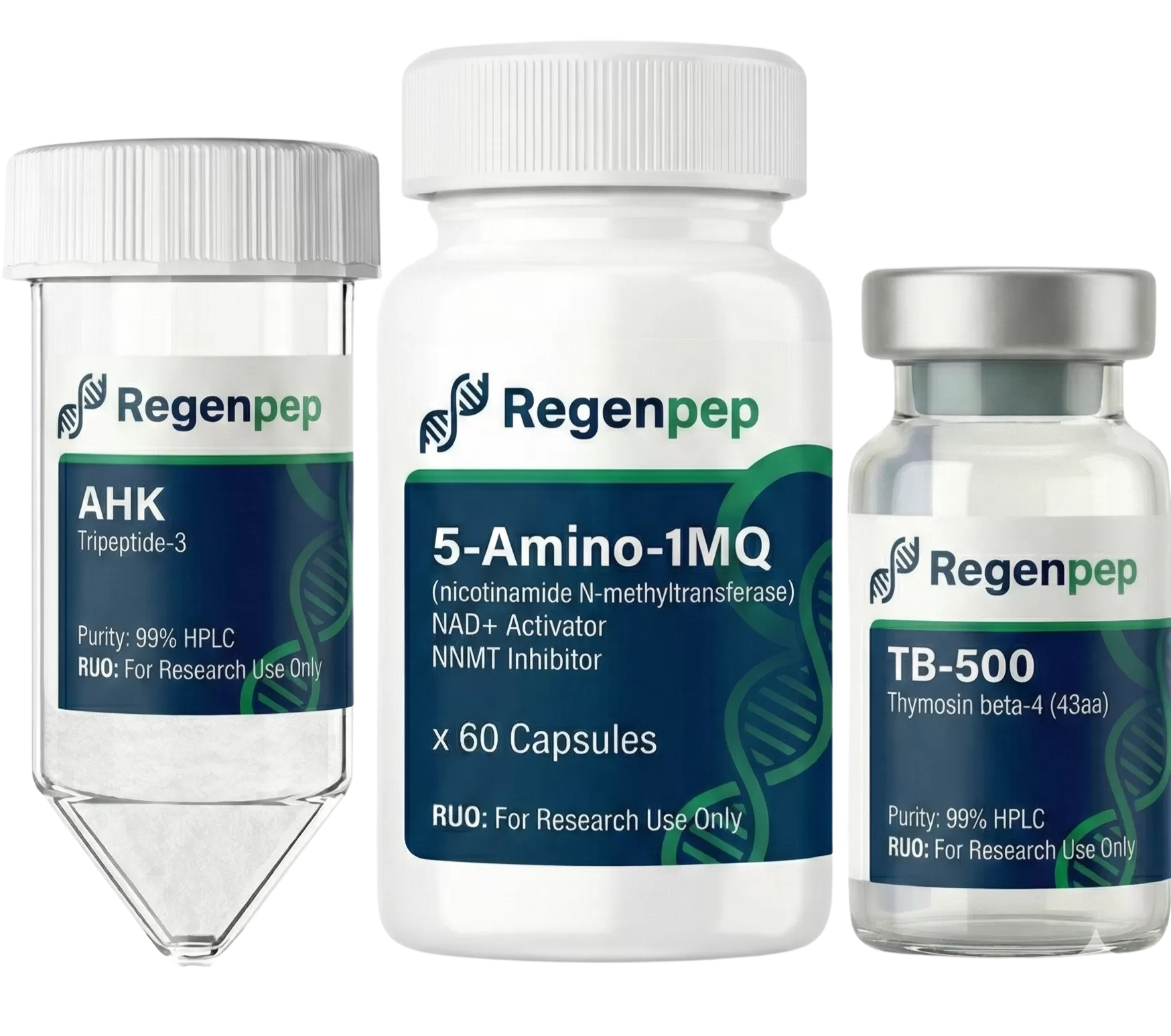
RegenPep is an infrastructure-grade supplier for the life sciences. We provide high-purity (≥99%) lyophilized compounds, verified by third-party HPLC & Mass Spectrometry, strictly for in-vitro laboratory analysis.
Regulatory Notice: All products listed on this domain are chemically synthesized compounds intended solely for laboratory research and development use. They are not intended for human consumption, therapeutic use, or diagnostic application.
Current Inventory
Lyophilized Stable Cakes
Purity Threshold
≥99%
Format
Freeze-Dried
Operational Metrics
Standardized reliability for complex assays.
Eliminating Variables in
Biochemical Research
In experimental design, reagent consistency is the bedrock of reproducibility. RegenPep mitigates the “batch effect” phenomenon by enforcing a stringent dual-verification protocol. We do not simply warehouse peptides; we validate their molecular integrity before they enter the cold chain.
High-Performance Liquid Chromatography (HPLC)
HPLC is employed to separate, identify, and quantify each component in the lyophilized mixture. This technique is critical for detecting synthesis byproducts such as deletion sequences (missing amino acids) or incomplete deprotection species that could interfere with receptor binding affinity.
- Detection of truncated analogs
- Quantification of main peak purity (Target: ≥99%)
- Verification of salt counter-ion removal
Mass Spectrometry (MS)
While HPLC confirms purity, Mass Spectrometry confirms identity. By measuring the mass-to-charge ratio of ions, we verify that the molecular weight corresponds exactly to the theoretical mass of the specific amino acid sequence, ensuring no “scrambled” sequences exist.
- Precise molecular weight validation
- Identification of post-translational modifications
- Confirmation of sequence integrity
Scientific Reference Context
For detailed definitions of these analytical methods, we recommend reviewing established chemical literature. External sources help clarify standard industry terminology used in our COAs.
Research Knowledge Hub
Technical definitions to standardize terminology across your laboratory documentation.
Lyophilization
A freeze-drying process where water is removed from a frozen sample by sublimation under vacuum. This creates a stable peptide “cake” structure, preserving bioactivity and extending shelf life significantly compared to peptides in solution.
Peptide Bond
The chemical bond formed between two molecules when the carboxyl group of one molecule reacts with the amino group of the other molecule, releasing a molecule of water (H2O). This is the primary linkage in all protein structures.
Net Peptide Content
Distinct from purity. Purity measures the target peptide vs. impurities (via HPLC). Net Peptide Content measures the weight of the peptide vs. the total weight of the powder (which includes counter-ions and residual water).
Reconstitution
The process of restoring a lyophilized peptide to a liquid state. Researchers typically use bacteriostatic water or sterile saline. Care must be taken to add solvent slowly down the vial wall to avoid damaging the peptide structure.
TFA Removal
Trifluoroacetic acid (TFA) is often used in peptide synthesis. For sensitive cell culture assays, RegenPep ensures TFA salts are exchanged (usually for Acetate or Hydrochloride) to prevent cytotoxicity.
ISO 9001
An international standard for Quality Management Systems (QMS). Our accredited sourcing partners demonstrate the ability to consistently provide products that meet customer and regulatory requirements.
Principal Investigator Feedback
Our reagents are currently utilized in over 500 academic and private research facilities. Here is what the data says.
Technical FAQ
Common queries regarding peptide stability, documentation, and compliance.
What establishes the ≥99% purity standard?
Are these peptides suitable for in-vivo human usage?
How do you handle shipping stability for lyophilized goods?
Can I request raw data files for the Mass Spec analysis?
Secure your supply chain with
verified integrity.
Don’t let reagent variability compromise your data. Partner with RegenPep for a consistent, documentation-first procurement experience.
USA Based • ISO 9001 Sourcing • Research Use Only